



The Short Answer
Most photographers don't. If you shoot portraits, weddings, street, landscapes, or travel, your camera's self-timer and a cheap remote release will cover everything you need, and a trigger would sit in your bag unused.
You need one when the thing you're photographing happens faster than you can react to it, or when you can't be standing at the camera when it happens. That narrows it to four situations: lightning, high speed events like splashes and breaking objects, wildlife at a set spot, and long unattended sequences such as timelapse or star trails.
If none of those describe what you shoot, save your money. If one of them is the reason you keep missing shots, no amount of practice will fix it, because the limit is human reaction time rather than skill.
Quick Answer by What You Shoot
|
If you shoot |
Do you need a trigger? |
What to use instead |
|---|---|---|
|
Portraits, weddings, events |
No |
Self-timer or a basic remote release |
|
Landscapes, travel, street |
No |
Self-timer, or a remote for long exposures |
|
Night sky, star trails |
Probably not |
An intervalometer, many cameras have one built in |
|
Timelapse |
Maybe |
Built-in interval mode if your camera has one |
|
Lightning and storms |
Yes |
Nothing else reacts fast enough in daylight |
|
Splashes, droplets, impacts |
Yes |
A sound or laser trigger is the only practical route |
|
Wildlife at a fixed spot |
Yes |
A motion or laser trigger, while you wait elsewhere |
A Trigger Is Not the Same as a Remote
This is where most of the confusion sits, and it's worth clearing up before you spend anything.
A remote shutter release presses the button for you. You decide when, it just saves you touching the camera. That's useful for avoiding shake on long exposures, and it costs very little.
A camera trigger decides when. It watches for something, a flash of light, a sound, a beam being broken, a set interval, and fires the shutter the moment it detects it. You don't have to be there, and more importantly you don't have to be fast.
That difference is the whole question. If your problem is camera shake, buy a remote. If your problem is that the moment is over before you can respond, that's what a trigger exists for. Our beginner's guide to camera triggers covers the mechanics in more depth.
How the Options Compare
|
Tool |
Who decides timing |
Typical cost |
Best for |
|---|---|---|---|
|
Self-timer |
You, with a fixed delay |
Free, built in |
Avoiding shake on a tripod |
|
Remote release |
You, from a distance |
Low |
Long exposures, group shots |
|
Intervalometer |
A clock |
Low to moderate |
Timelapse, star trails |
|
Camera trigger |
A sensor reacting to an event |
Moderate |
Lightning, splashes, wildlife |
When You Don't Need One
Being straight about this matters more than the sales case, because a trigger bought for the wrong reason is an expensive paperweight.
-
You want sharper long exposures. A tripod plus the two second self-timer solves this for free. A remote release solves it for a little more.
-
You shoot people. Portraits, weddings, and events are about anticipation and timing you can learn. No sensor helps you read a moment before it happens.
-
You want to be in your own photos. The self-timer was designed for exactly this.
-
You shoot timelapse and your camera has an interval mode. Many Canon, Nikon, Sony, Fujifilm, and OM System bodies include one. Check your menu before buying hardware that duplicates it.
-
You're new and still learning exposure. Spend the money on a tripod and a decent lens first. Those improve every photograph you take. A trigger improves a narrow category.
There's one more case worth naming. If you shoot on an OM System body and your interest is star trails or light painting, the built-in Live Composite mode does that job well, and a trigger adds little for those specific subjects.
When You Do Need One
Four situations, and they share a single trait. In all of them, the decisive moment either arrives faster than a person can respond, or arrives when nobody is standing at the camera.
1. Lightning
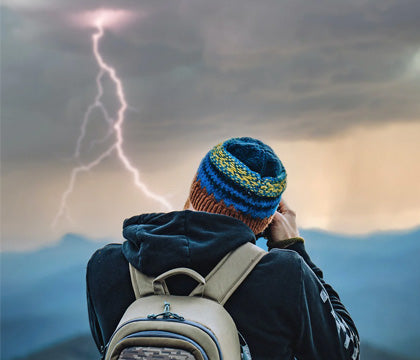
A lightning flash is over in a fraction of a second. Human reaction time, measured from seeing something to pressing a button, runs to roughly 200 to 300 milliseconds. The bolt is gone well before your finger moves.
At night you can work around this with bulb mode, holding the shutter open so a strike happens while the sensor is already recording. In daylight that fails completely, because an exposure long enough to catch a random strike would blow out the sky. Daylight lightning is the clearest case in photography where a trigger is not a convenience but a requirement.
2. High Speed Events
Water drops colliding, balloons bursting, glass breaking, fruit hitting a surface. These happen in milliseconds, and they're not repeatable by eye. A sound trigger fires on the noise of the impact, a laser trigger fires when something crosses a beam, and both let you set a delay in milliseconds so you can choose which instant of the event you capture. High speed photography is effectively built on this.
3. Wildlife at a Fixed Spot
If you know where an animal will be, a feeder, a perch, a gap in a hedge, but not when, a trigger lets you set the camera there and wait somewhere else. The point isn't speed here, it's that your presence would change the behaviour you're trying to photograph.
4. Long Unattended Sequences
Timelapse over several hours, star trails through the night, construction progress across weeks. The requirement is consistency over a long stretch, and a trigger that fires on a precise interval handles that without you standing by the tripod at two in the morning.
The Reaction Time Problem, Plainly
It helps to see the numbers side by side, because this is the one argument that doesn't come down to preference.
-
A lightning flash: over before you register it. Individual return strokes are measured in microseconds, and the whole flash in a small fraction of a second.
-
A water drop crown forming and collapsing: around 5 milliseconds.
-
Human visual reaction time: roughly 200 to 300 milliseconds, with healthy young adults averaging a little over 200 in lab conditions.
-
A dedicated trigger's detection: about 1 millisecond.
No amount of practice closes that gap. This is the honest core of the argument for a trigger, and it's also why a trigger does nothing for subjects that move at human speed. Buying one to photograph a wedding would be like buying a telescope to read a book.
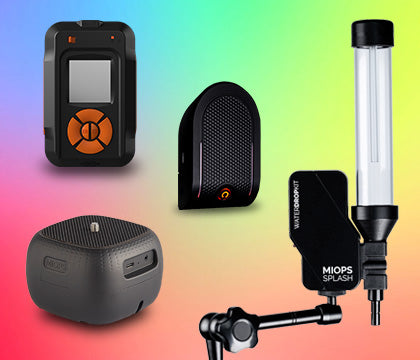
¡Toma fotos casi imposibles convirtiendo tu cámara en un dispositivo de captura de alta velocidad!MIOPS Smart Trigger es un disparador...

Smart+ | Disparador de Cámara Versátil
Lightning, sound, laser, timelapse, HDR and long exposure modes in one unit. $279.
What to Check Before You Buy
If you've decided one of the four situations above describes your work, three things decide whether a given trigger is the right one.
Camera Compatibility
Triggers connect through a cable to your camera's remote port, and manufacturers use different connectors. Canon, Nikon, Sony, Fujifilm, Panasonic, and Olympus each have their own standards, sometimes more than one across a range. Check your exact model on the camera compatibility page so the correct cable ships with the order. The MIOPS Smart+ supports more than 500 bodies this way.
The Modes You'll Actually Use
A multi-mode trigger is better value than several single-purpose ones, but only if you'll use more than one mode. Be honest about this. If you only ever shoot lightning, a lightning-only device may serve you fine. If you can see yourself trying splashes or timelapse later, a unit covering lightning, sound, laser, timelapse, HDR, and long exposure in one body avoids buying twice.
Standalone or Phone Controlled
Some triggers need a phone to configure, some have their own screen and buttons, some do both. In cold or wet field conditions, being able to adjust settings on the device itself without unlocking a phone is worth more than it sounds.
Power and Field Reliability
Whatever you buy will spend its working life outdoors, often at night and sometimes in rain. Two things matter more than the spec sheet suggests: how long it runs on a charge, and whether it survives the conditions you shoot in. A trigger that dies four hours into an eight hour timelapse has failed regardless of how fast it detects.
Check the battery life figure against your longest realistic session, and plan for a spare if you shoot unattended sequences. A unit that takes a standard removable battery is easier to keep running in the field than one you have to plug in.
What a Trigger Will Not Do
Setting expectations here saves disappointment, and these are the things people most often assume are included.
-
It won't compose the shot. You still frame, focus, and set exposure. The trigger only decides the instant of release.
-
It won't make a dark scene brighter. Exposure is still your job, and a badly exposed frame fired at the perfect moment is still a badly exposed frame.
-
It won't guarantee focus. Autofocus struggles in the dark, so most trigger work uses manual focus set before the event.
-
It won't predict anything. A sensor reacts to something that has already begun. That reaction is fast enough to matter, but it is still a reaction.
Understood properly, a trigger solves exactly one problem: the gap between an event happening and a shutter opening. Everything else about the photograph remains yours to get right.
Try These First
Before spending on a trigger, it's worth confirming you've hit a genuine limit rather than a fixable habit.
-
Use the self-timer on a tripod for a week of long exposures. If your sharpness problem disappears, that was the problem.
-
Check whether your camera has a built-in interval timer. If timelapse is your goal, you may already own the capability.
-
Try bulb mode on a night storm. If you're getting lightning this way and only shoot at night, you may not need to go further.
-
Borrow one if you can. Most people know within a single session whether a trigger addresses their problem.
If you work through that list and still keep missing the frame, the limit is hardware and a trigger is the fix. If the list solves it, you've saved a few hundred dollars.
Common Mistakes and Why They Happen
Buying a trigger to fix camera shake is the most frequent misunderstanding. Shake is solved by a tripod and a timer. A trigger addresses timing, which is a different problem entirely.
Buying before checking compatibility leads to a device that physically can't connect. The cable is specific to your camera's port, so confirm the model first.
Expecting it to work straight out of the box at default settings causes a lot of early frustration. Sensitivity needs tuning to your conditions, and the first session is usually calibration rather than results.
Assuming more modes always means better value. If you will only ever use one, you are paying for capability that sits idle.
Frequently Asked Questions
Do you need a camera trigger?
Most photographers don't. A trigger earns its place in four situations: lightning, high speed events such as splashes and impacts, wildlife at a fixed location, and long unattended sequences like timelapse. For portraits, weddings, landscapes, travel, and street work, a self-timer or basic remote release is enough.
What is the difference between a camera trigger and a remote shutter release?
A remote release presses the shutter when you decide, from a distance, which helps avoid camera shake. A camera trigger decides for you, firing automatically when a sensor detects light, sound, a broken laser beam, or a set interval. A remote solves shake, a trigger solves timing.
Is a camera trigger worth it for beginners?
Usually not as a first purchase. A tripod and a better lens improve every photograph you take, while a trigger improves a narrow category of subjects. It becomes worth it once you're regularly attempting lightning, high speed, or unattended work and missing shots because of timing.
Can I photograph lightning without a camera trigger?
At night, yes. Use bulb mode or a long exposure so the shutter is already open when a strike happens. In daylight this doesn't work, because an exposure long enough to catch a random strike would overexpose the sky, so a trigger is effectively required for daytime lightning.
How fast does a camera trigger react?
A dedicated trigger detects an event in around 1 millisecond. Human visual reaction time runs to roughly 200 to 300 milliseconds, so the trigger responds hundreds of times faster, which is why it captures events that are physically impossible to catch by hand.
Will a camera trigger work with my camera?
It depends on the connector. Triggers attach to the camera's remote port, and Canon, Nikon, Sony, Fujifilm, Panasonic, and Olympus use different standards. Check your exact model on the manufacturer's compatibility list before ordering so the correct cable is included. The MIOPS Smart+ supports over 500 bodies.
Do I need a camera trigger for timelapse?
Not necessarily. Many current cameras include a built-in interval timer that handles standard timelapse. A trigger becomes useful if your camera lacks one, or if you want bulb ramping and long exposure timelapse that go beyond what the built-in mode offers.
Keep Exploring
Related reading: What is a Camera Trigger? A Simple Guide for Beginners
Related reading: 10 Things You Can Do with a Camera Trigger
Confirm your model and the cable it needs before ordering.
Sources
MIOPS Smart+ product page, 1 ms detection, 500+ supported cameras, mode list and current price: https://www.miops.com/products/smart
MIOPS camera compatibility checker: https://www.miops.com/pages/camera-compatibility