



Lightning photography has always been a mix of planning, patience, and timing. Getting your camera to fire at the exact moment lightning flashes means dealing with events that happen faster than human reaction time.
In recent years, camera manufacturers have introduced pre-capture features that buffer frames before you fully press the shutter. At the same time, smartphones have become surprisingly good at automatically capturing lightning using computational photography. This has led many photographers to ask a fair question:
If my camera has pre-capture, do I still need a lightning photography trigger like the MIOPS Smart+? And if my phone can already catch lightning, what role does dedicated gear play in 2026?
This article breaks down how each approach works, where each one excels, and why a dedicated lightning trigger still has a place in many photographers’ workflows.

How Lightning Photography Works
Lightning doesn’t wait. A strike can last only milliseconds and often occurs in multiple rapid electrical events. Because of this, lightning photography is fundamentally a timing challenge, not just an exposure challenge.
At night, photographers often rely on long exposures to increase the odds of capturing a strike. This works, but it is still chance-based rather than intentional. In daylight, the challenge becomes harder. Lightning flashes can be shorter than shutter lag, making reaction-based shooting unreliable even with fast cameras.
That is where buffering and triggering tools come into play.
What Pre-Capture Actually Does
Many modern mirrorless cameras now offer pre-capture or pre-release buffer modes. These features continuously record frames into temporary memory. When you fully press the shutter, the camera saves frames from just before that moment, effectively reducing reaction delay.
Pre-capture can be useful for unpredictable action, but it has practical limits:
- It often generates large bursts of similar frames that still need to be sorted later
- It can drain battery quickly since the sensor and processor are active continuously
- Some implementations restrict RAW workflows or are limited to specific burst modes
- Most importantly, it still depends on you pressing the shutter at roughly the right moment
Pre-capture gives you a second chance, but it does not remove the need for human timing.
Smartphones and Lightning Capture
Smartphones have become impressively capable thanks to computational photography. They detect sudden changes in brightness and automatically select frames that appear to include lightning.
This works well for casual shooting and fast sharing, but there are trade-offs:
- Smaller sensors and limited manual control
- Less consistent results across different lighting conditions
- Reduced dynamic range compared to dedicated cameras
Smartphone lightning capture is convenient and often impressive, but it does not replace the level of control many photographers want from a DSLR or mirrorless setup.
Lightning Trigger vs Pre-Capture: What’s the Difference?
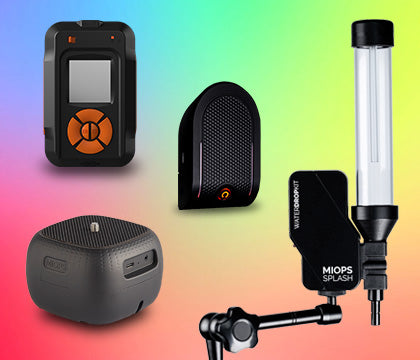
This is where a dedicated lightning photography trigger like MIOPS Smart+ differs fundamentally from both pre-capture and smartphones.
Instead of buffering frames or relying on computational selection, Smart+ uses external event detection. It monitors real changes in light and triggers the camera only when lightning actually occurs.
This distinction matters in real-world shooting.

Why Event Detection Still Matters
Not all lightning detection systems are equal. DIY implementations or generic sensor chips can suffer from response-time limitations. Dedicated triggers rely on tuned hardware, firmware, and thresholding to respond fast enough for real lightning events, especially in daylight.
Because Smart+ triggers the camera based on the event itself, it removes the need to keep the camera in a constant recording state or rely on reaction timing.
Where MIOPS Smart+ Fits In
Smart+ offers several practical advantages in real shooting conditions:
Reliable Event Detection
The device watches for actual changes in brightness and triggers the camera when lightning happens, not before or after.
Efficient Capture for Long Sessions
Because the camera is not constantly buffering, battery life is preserved during long storm sessions.
Stronger Daylight Performance
Daylight lightning is difficult because flashes are brief and easily lost in ambient light. Smart+ allows photographers to lock exposure and sensitivity while relying on event detection rather than reaction time.
Beyond Lightning Photography
Smart+ supports multiple creative modes, including sound triggering, laser triggering, timelapse, bulb ramping, and high-speed flash workflows. This makes it useful beyond a single genre of photography.
Quick Comparison: Pre-Capture, Smart+, and Smartphones
|
Feature |
Pre-Capture (Camera) |
MIOPS Smart+ |
Smartphone Capture |
|
Reduces reaction delay |
Yes |
Yes |
Partial |
|
Detects lightning automatically |
No |
Yes |
Software-based |
|
Daylight lightning reliability |
Moderate |
Strong |
Limited |
|
Battery efficient for long sessions |
No |
Yes |
Moderate |
|
Manual exposure control |
Full |
Full |
Limited |
|
Avoids sorting hundreds of frames |
No |
Yes |
Yes |
|
Supports creative triggers beyond lightning |
No |
Yes |
No |
Practical Use Cases
You might rely primarily on pre-capture if:
- You prefer simplicity and minimal setup
- You do not mind sorting large bursts of images
You might choose Smart+ if:
- You shoot daylight lightning or variable conditions
- You want intentional captures without constant buffering
- You plan to explore other high-speed or creative trigger workflows
- You want to stay in a safe place (e.g., indoors or in your car) while automatically triggering your camera during storms
Smartphones are ideal for:
- Quick, spontaneous lightning shots
- Casual shooting and easy sharing
Some photographers will always capture lightning by instinct and timing alone. When it works, it works. The right tool depends on how consistently you want to achieve results.
So, Do You Still Need a Lightning Trigger in 2026?
Short answer: it depends on your workflow.
Camera pre-capture reduces reaction delay but still relies on human timing and produces large file volumes. Smartphones offer convenience but limited control. A dedicated lightning trigger like MIOPS Smart+ detects the event itself and triggers the camera only when lightning actually occurs.
Smart+ is not about replacing cameras or phones. It is about giving photographers precise control, efficiency, and creative flexibility in situations where timing by instinct alone is unreliable.
For photographers who care about intentional capture, daylight performance, and versatile creative tools, Smart+ remains a relevant and useful part of the kit in 2026.