



The Short Answer
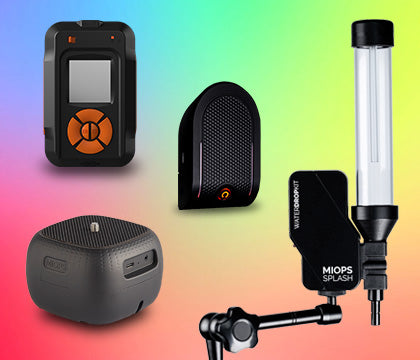
Meteorologists officially recognize two types of lightning: intra-cloud (a discharge inside a single storm cloud) and cloud-to-ground (a discharge between the cloud and the earth), which splits further into a negative flash or a rarer, more powerful positive flash. Photographers also talk about a handful of visually distinct forms, cloud-to-air, ground-to-cloud, cloud-to-cloud, ribbon, bead, and sheet lightning, because each one changes what shows up in your frame and what creative photography ideas are worth trying. Every type strikes in a fraction of a second, so the most reliable way to capture any of them is a camera trigger with a dedicated lightning mode, like the MIOPS Smart+, set to manual exposure with your shutter left open or your trigger's sensitivity dialed in, rather than trying to time the shutter by hand.
Few photographers could name more than one or two types of lightning, yet there's a precise classification system behind every bolt, and it's worth knowing. Lightning remains one of the most reliably dramatic subjects in creative photography, provided you understand what you're actually looking at. A distant sheet of intra-cloud lightning calls for a completely different composition than a bright, branching cloud-to-ground strike right in front of you, and a surprising number of missed shots trace back to not recognizing which one is unfolding.
This guide walks through the official classifications first, then the visual forms photographers actually talk about in the field, a batch of creative photography ideas suited to each one, and the camera settings and trigger setup that turn a lucky frame into a repeatable one.

Photo by Rohan Wilson, MIOPS Creator Lab (Australia), captured with Smart+
The Official Lightning Classifications
According to the National Weather Service, there are two main types of lightning: intra-cloud and cloud-to-ground. Everything else you'll read about, ribbon lightning, sheet lightning, upward lightning, is a visual variation or subtype within that core science, not a separate official category.
Intra-Cloud Lightning
Intra-cloud lightning is an electrical discharge between oppositely charged areas inside the same thunderstorm cloud. It's the most common form of lightning overall, and it's what produces the diffuse, glowing flash you see illuminating a cloud from within without a visible channel reaching the ground.
Cloud-to-Ground Lightning
Cloud-to-ground lightning is a discharge between the cloud and the earth's surface, and it's further split by the charge involved. A negative flash, the most common and most photographed type, happens when negative charge in the cloud connects with positive charge on the ground. A positive flash is rarer, carries more energy, and tends to produce a noticeably brighter, louder strike, which is part of why it has a reputation as the most dangerous form of lightning to be caught near.
 Photo by Syafiq Adnan, MIOPS Creator Lab (Malaysia), captured with Smart+
Lightning Types Every Creative Photographer Should Recognize
Beyond the two official categories, storm chasers and photographers use a handful of descriptive terms for the different shapes lightning takes in a frame. None of these are competing scientific classifications, they're subtypes and visual variations that fall under intra-cloud or cloud-to-ground lightning, but recognizing them helps you plan a shot.
Ribbon and Bead Lightning
Wind does something interesting to a cloud-to-ground strike: it shifts the channel sideways between successive strokes, so instead of one thin line, you get a broadened, smeared band. That's ribbon lightning. Bead lightning is the rarer cousin, where the channel breaks into short, bright segments as it fades, almost like a string of lights strung across the sky. Neither is a separate type of lightning scientifically. Both are cloud-to-ground strikes caught under conditions that changed how the channel looks on camera.
Cloud-to-Air Lightning
Sometimes a charge reaches out toward the oppositely charged air around it and just stops there, never touching the ground. That's cloud-to-air lightning, and you'll usually spot it as a branch that ends abruptly in open sky with nothing below it. Frame it against a darker patch of sky and the branching structure gets room to actually stand out instead of getting lost.
Ground-to-Cloud (Upward) Lightning
Most lightning travels down. This type goes up. Ground-to-cloud lightning typically starts from very tall structures, skyscrapers, towers, antennas, that build up enough charge to initiate the discharge themselves. Near a city skyline during a storm, this is the type most likely to hand you a striking foreground: a building with a bolt visibly connecting straight into it.
Cloud-to-Cloud (Inter-Cloud) Lightning
Cloud-to-cloud lightning, sometimes called inter-cloud lightning, strikes between two oppositely charged regions in separate clouds, with the discharge traveling visibly through open air between them. People confuse it with intra-cloud lightning constantly. The distinction is simple once you know it: does the charge stay inside one cloud, or does it cross between two?
Sheet Lightning
Sheet lightning isn't really its own type at all. It's intra-cloud lightning, viewed from far enough away, or through enough cloud cover, that you see a broad glow instead of a distinct channel. It's one of the best options for wide, moody storm shots, since it lights up a whole section of sky without one hard-edged bolt dominating the frame.
Photo by Ghassan, MIOPS Creator Lab (Australia), captured with Smart+
Why Lightning Type Matters for Your Creative Photography Ideas
The type of lightning you're likely to get on a given night should shape your whole approach, not just your settings. A storm producing mostly intra-cloud and sheet lightning rewards a wide composition with a strong foreground silhouette. You're photographing mood and glow here, not a single decisive bolt. A storm throwing frequent cloud-to-ground strikes flips that: go tighter, and get your trigger response as fast as possible, because now you're trying to catch one specific channel before it fades.
Watch a storm for a few minutes before you commit to a composition. If you're seeing mostly diffuse glow with no visible channels, you're likely watching intra-cloud activity and should frame wide. If you're seeing sharp, branching strikes reaching the ground, cloud-to-ground is dominant, and a tighter frame around where strikes are clustering will serve you better.
Creative Photography Ideas to Try With Different Lightning Types
Once you can tell one type from another, a few creative photography ideas open up that go beyond just pointing a lens at the sky:
-
Silhouette against sheet lightning: position a strong foreground silhouette, a tree line, a windmill, a lone building, against a stretch of sky producing steady intra-cloud glow. The soft, even light works like a slow strobe for your foreground.
-
Layered composite of multiple strikes: shoot a sequence of frames on a locked-off tripod during an active cloud-to-ground period, then blend the brightest bolts from several frames in post to show more lightning activity than actually appeared in any single exposure.
-
Upward lightning with an urban skyline: if you're near tall buildings during a storm, watch for ground-to-cloud strikes originating from rooftops and antennas, and frame your shot to include the structure the bolt is coming from for a sense of scale and power.
-
Color contrast at blue hour: storms that roll in right at dusk let you combine a deep blue sky with warm, glowing lightning, a combination that's hard to get once full darkness sets in.
-
Wide panoramic storm structure: on a distant storm with visible cloud-to-cloud activity, a wide or panoramic composition can capture the storm's structure and multiple lightning types in the same frame, rather than isolating a single bolt.

Photo by Larry Masters, MIOPS Creator Lab (United States), captured with Smart+. A foreground silhouette against an active strike.

Photo by Thomas Nicodemo, MIOPS Creator Lab (United States), captured with Smart+. Several strikes caught in the same frame.

Smart+ Multi-Mode Camera Trigger | Lightning, Sound, Laser and Timelapse
Take almost impossible photos by turning your camera into a high-speed capture device! MIOPS Smart Trigger is a versatile camera...
Multi-mode camera trigger with a dedicated lightning mode
Camera Settings and Setup for Capturing Any Lightning Type
Regardless of which type you're chasing, the starting settings are similar. Set your camera to manual mode, ISO 100, an aperture between f/8 and f/11, and either a long exposure or bulb mode at night, or a fast shutter speed during the day paired with a trigger's lightning detection instead of a long exposure. Use a wide angle or standard lens, a sturdy tripod, and manual focus set to infinity and verified visually rather than trusting autofocus in low light.
For the full breakdown on lenses, tripods, weatherproofing, and how to decide between a wide angle and a longer lens for a specific storm, see our complete guide to
Choosing the Right Gear for Lightning Photography.
Daytime vs Nighttime Settings
At night, a long exposure or bulb mode does most of the work. The shutter can stay open for seconds at a time waiting for a strike without overexposing the rest of the frame. During the day, that approach falls apart completely. A daytime exposure long enough to catch a random strike would blow out the sky, so daytime lightning photography depends almost entirely on a trigger's detection speed instead. Set a faster shutter speed suited to the ambient light, around 1/200 to 1/500 depending on conditions, and let your trigger's Lightning mode fire the shot the instant it detects a flash.

Photo by Phill Dodds, MIOPS Creator Lab (Australia), captured with Smart+. A daytime cloud-to-ground strike.
Editing Lightning Photos for More Creative Photography Impact
A technically sharp lightning photo can still fall flat without a bit of post-processing attention, and a few adjustments make a real difference regardless of which lightning type you captured.
-
Boost contrast selectively on the bolt itself rather than the whole image, so the channel reads bright and crisp without crushing the shadow detail in your foreground.
-
Cool the color temperature slightly on storms lit mostly by intra-cloud glow, since that light often skews warm or muddy straight out of camera and a cooler grade reads as more dramatic.
-
If you're blending multiple exposures to show several strikes in one frame, keep the base sky and foreground from a single frame and layer in only the lightning channels from the others, rather than blending entire skies, which tends to look obviously composited.
-
Be upfront about composites. If you're sharing a blended, multi-strike image, saying so in the caption keeps things honest and, in most photography communities, doesn't cost you any credibility since the technique is common and well understood.
Using MIOPS Smart+ to Capture Lightning Automatically
No matter which lightning type is active, human reaction time simply can't keep up with a strike that's over in a fraction of a second. The MIOPS Smart+ has a dedicated Lightning mode that detects a strike in as little as 1 millisecond and fires your camera automatically, so you're not relying on your own reflexes at all. Attach Smart+ to your camera, set the mode to Lightning, start with a sensitivity around 1 to 2 percent, and adjust from there: raise sensitivity if it's missing dimmer strikes, lower it if it's triggering on ambient light or distant flashes that aren't producing a usable frame.
Staying Safe While You Track Different Lightning Types
All lightning, regardless of type, is dangerous, and cloud-to-air and ground-to-cloud lightning in particular can strike well outside the area directly under the storm. The National Weather Service is direct about this: if you can hear thunder, you're already within striking range. Shoot from inside a vehicle or a substantial building whenever you can, and treat a remote trigger as a safety tool as much as a creative one, since it lets you keep your distance from the tripod itself once it's set up.
Common Mistakes and Why They Happen
A missed shot almost always traces back to timing the shutter by hand. Even a fast reaction is far slower than a lightning flash, which is exactly why a dedicated trigger, not quicker reflexes, is the real fix.
A washed out, overexposed bolt usually means your aperture or ISO was dialed in for a bright cloud-to-ground strike when the storm actually delivered a dimmer intra-cloud or sheet lightning event instead. Check your first few frames early and adjust to match what the storm is producing, not what you expected.
Technically sharp lightning can still make for a flat, uninteresting photo, and that's almost always a composition problem rather than a settings one. A single bright cloud-to-ground bolt can carry a fairly minimal composition on its own. Sheet or intra-cloud lightning can't. It needs a strong foreground or a wide, structural frame to hold anyone's interest.
Soft focus across an entire storm sequence almost always traces back to autofocus hunting in low light. Switch to manual, set it to infinity, and verify with a zoomed-in live view check before the storm gets going, not after.
Frequently Asked Questions
What are the two official types of lightning?
The National Weather Service recognizes intra-cloud lightning, a discharge inside a single cloud, and cloud-to-ground lightning, a discharge between the cloud and the earth. Cloud-to-ground lightning is further split into a negative flash or a rarer, more powerful positive flash.
What is the most dangerous type of lightning?
Positive cloud-to-ground lightning is generally considered the most dangerous. It's rarer than a negative flash but carries significantly more energy, and it can strike well outside the area directly under a storm.
What is sheet lightning?
Sheet lightning is intra-cloud lightning viewed from a distance or through cloud cover, so it appears as a broad glow rather than a distinct channel. It's the same underlying discharge, just seen under different viewing conditions.
Can lightning strike without a visible bolt reaching the ground?
Yes. Intra-cloud lightning stays inside a single cloud, and cloud-to-air lightning reaches into nearby air without ever completing a path to the ground. Both are common and both are visible from the outside as a flash or glow.
What camera settings work best for photographing lightning?
Start with manual mode, ISO 100, an aperture between f/8 and f/11, and a long exposure or bulb mode at night. Use manual focus set to infinity, verified visually, since autofocus is unreliable in low light conditions.
Do I need a camera trigger to photograph lightning?
Not strictly, but it makes a significant difference. A lightning flash lasts a fraction of a second, faster than human reaction time, so a trigger with a dedicated lightning detection mode captures strikes you would otherwise miss by hand.
Is it okay to blend multiple lightning photos into one composite?
It's a common and widely accepted technique in storm photography, since capturing several strikes in a single natural exposure is extremely unlikely. Most photographers keep the base sky and foreground from one frame and layer in lightning channels from others, and it's good practice to disclose the composite in your caption.
Why does my lightning look washed out or too dim?
A washed out bolt usually means your settings were tuned for a dimmer intra-cloud or sheet lightning event when a brighter cloud-to-ground strike came through, or vice versa. Check your first few frames as the storm develops and adjust aperture or ISO to match what the storm is actually producing.
Keep Exploring
Related reading: Choosing the Right Gear for Lightning Photography
Related reading: 5 Best Real Time Lightning Strike Map Apps and Websites
More gear, tips, and creative photography ideas for storm season.
Sources
National Weather Service: Understanding Lightning: Types of Flashes: https://www.weather.gov/safety/lightning-science-types-flashes
National Weather Service: Understanding Lightning Science (heat and temperature figures): https://www.weather.gov/safety/lightning-science-overview
MIOPS Smart+ product page: lightning detection speed and camera compatibility: https://www.miops.com/products/smart